No-prep and minimal-prep veneers in Dubai
Dr. Leila's cosmetic work is built on one principle: keep as much of your natural tooth as possible. Many smiles can be transformed by adding material to the teeth rather than drilling them down. Dentists call this minimally invasive or additive cosmetic dentistry, and the veneers are known as no-prep or minimal-prep veneers.
Healthy enamel is the strongest surface for bonding and the best protection for the tooth underneath. Preserving it means less sensitivity, a more natural result and, in many cases, more options for the future.
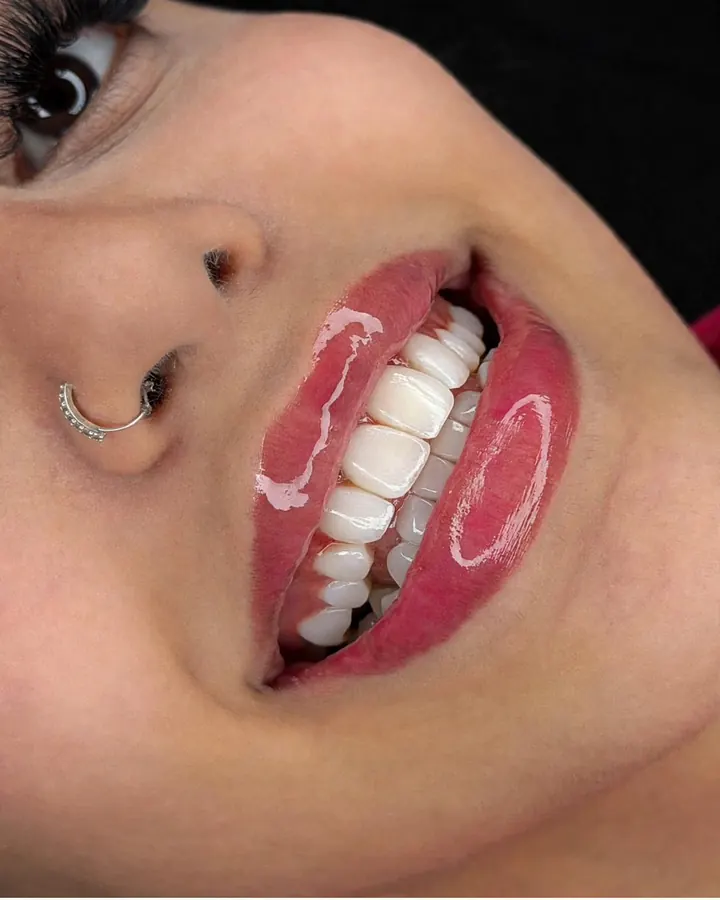
Is it right for you?
- Teeth that are small, short or slightly worn
- Small gaps between the front teeth
- Mild discolouration together with changes in shape
- Anyone who wants a new smile while protecting their natural teeth
Good to know
- Enamel removed
- None, or a few tenths of a millimetre, depending on your teeth
- Materials
- Ultra-thin porcelain or composite
- Anaesthetic
- Often not needed for no-prep cases
- Suitability
- Decided at your consultation; not every smile is suitable
How it works
Assess
Teeth, gums and bite are checked to see whether no-prep or minimal-prep is possible for you.
Design first
Your smile is planned digitally and tried in as a mock-up, so the final shape is agreed before any work begins.
Prepare only where needed
If some reshaping is required, it is guided by the mock-up so only the thinnest necessary amount of enamel is touched.
Bond and polish
Ultra-thin porcelain or hand-sculpted composite veneers are bonded to your enamel and polished.
Traditional veneers compared with minimal-prep veneers
| Traditional veneers | No-prep and minimal-prep | |
|---|---|---|
| Enamel removed | Often about 0.5 to 0.7 mm | None to a few tenths of a millimetre |
| Anaesthetic | Usually needed | Often not needed |
| Temporary veneers | Usually needed | Often not needed |
| Natural tooth kept | Less | As much as possible |
When a little more preparation is needed
No-prep veneers are not right for everyone. Teeth that stick out or are crowded, very dark discolouration and large old fillings often need some reshaping for a natural result. Even then, Dr. Leila plans first and removes only what the design requires, and she will tell you honestly which option suits your teeth.
Questions patients ask
What are no-prep veneers?
No-prep veneers are ultra-thin porcelain or composite veneers bonded onto your teeth without drilling away enamel. Minimal-prep veneers need only a very small amount of reshaping. Whether you are suitable depends on the position, size and colour of your teeth, which Dr. Leila checks at your consultation.
Do no-prep veneers look bulky?
Not when they are planned well. Because nothing is removed, the veneers must be very thin and the design has to allow for the extra thickness. Digital Smile Design and a mock-up let you check the shape and feel before treatment, and Dr. Leila will tell you honestly if a no-prep result would look bulky on your teeth.
Do veneers damage natural teeth?
Dr. Leila works minimally invasively. Composite veneers often need no removal of enamel, and porcelain veneers usually need only a very thin layer of reshaping. Your teeth are assessed first, and you will know exactly what is involved before you agree to treatment.
How long do veneers last?
With good care, porcelain veneers often last 10 to 15 years or more. Composite veneers typically last around 5 to 7 years and benefit from regular polishing. Grinding, biting hard objects and skipping check-ups shorten their life.